DJ QUEEN DANI | INTERVIEW + TRACK REVIEW
- Jul 25
- 9 min read
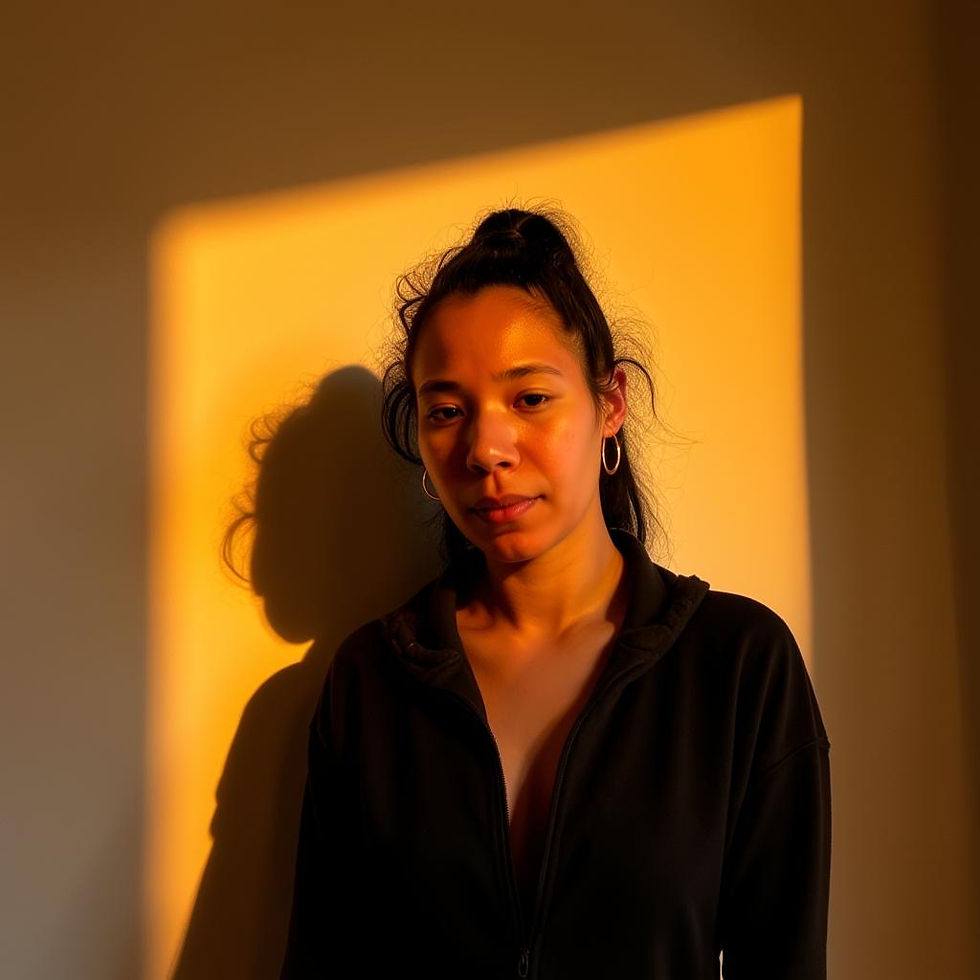
There are few genres that have endured quite like emo and pop-punk. Long after the eyeliner faded and the fringes grew out, the songs remained, continuing to soundtrack heartbreak, self-discovery and the moments in life that words alone struggle to explain. For DJ Queen Dani, those records were never simply nostalgic favourites. They became the foundation for building a community where authenticity, vulnerability and connection are celebrated just as loudly as the music itself.
From leaving Saudi Arabia to pursue a new life in Australia, earning a PhD in engineering, and now creating immersive events that unite thousands through a shared love of alternative music, DJ Queen Dani's journey is anything but conventional. As she begins the next chapter by releasing original music of her own, she's proving that the emotional honesty at the heart of the emo scene was never confined to a single era. It continues to evolve through the people who refuse to let it disappear.
We caught up with DJ Queen Dani to talk about why great songs outlive generations, the psychology of nostalgia, creating spaces where people feel safe to be themselves, and why vulnerability remains one of music's greatest strengths.
TRACK REVIEW -
There's something immediately inviting about Stop Acting Like This. It opens with a beautifully clean guitar tone, every string ringing with clarity, creating an intimate atmosphere before a single lyric has even been sung. It's the kind of introduction that pulls you closer rather than demanding your attention, setting the stage for a song built on honesty.
That honesty arrives almost instantly. DJ Queen Dani wastes no time getting to the heart of the story, delivering lyrics that feel less like a performance and more like a conversation you've been needing to have. There's no hiding behind clever metaphors here. The emotion is direct, relatable and refreshingly unfiltered.
When the chorus arrives, the track blooms. The full band crashes in with purpose, lifting the emotion without overpowering it, while Dani's vocal performance carries a quiet determination that perfectly suits the song's message. It's one of those choruses that feels instantly familiar, leaving you wanting to sing along long before it's over. By the time it finished, I was ready to stop acting like this... and add the track straight to my playlist.
One of the song's strongest moments comes in the second verse, where the arrangement pulls back and shifts gears. The change of pace adds a surprising amount of depth, almost as though Dani is reading a personal letter directly to the listener. It's an intimate moment that gives the track room to breathe before building once more towards its emotional finale.
Stop Acting Like This is proof that you don't need to overcomplicate a song to make it resonate. Honest songwriting, strong melodies and genuine conviction are more than enough, and DJ Queen Dani delivers all three with confidence.
You’ve built a career around music that many people associate with their teenage years. What do you think those songs understood about people that modern music sometimes misses?
I think the reason those songs still resonate is that, at the core, people go through many of the same experiences. We all experience heartbreak, rejection, uncertainty, belonging, loss, and growth in one way or another.
As a songwriter and creative, I've always believed in authenticity. The only stories I can genuinely tell are my own experiences and emotions, and I think that's what people connect with. When music comes from a real place, listeners can see themselves in it.
Sometimes in the music industry there's pressure to fit a particular image, trend, or expectation. That's not necessarily a bad thing—it's part of the business—but I think when authenticity becomes secondary, something gets lost. What made a lot of those emo and alternative songs so powerful was that they weren't afraid to be vulnerable, imperfect, or honest.
For me, that's what some modern music can be missing at times. The songs that endure are usually the ones where people feel like they're hearing a real person tell a real story.
Emo and pop-punk were never really about sadness. They were about feeling things intensely. Do you think today’s culture encourages people to feel less deeply than it used to?
What feels increasingly true in modern society is that emotional expression—vulnerability, transparency, and openly feeling things—often isn’t valued in the way it once was. There’s a subtle pressure to stay composed, detached, or “fine,” even when internally that isn’t the reality.
That’s why emo music was never really about sadness in a simplistic sense. It was about honesty. It gave permission to feel things fully—whatever those feelings were—without filtering them for acceptability. Intensity wasn’t the problem; suppression was.
In that sense, something has shifted. In today’s culture, we’re often less encouraged to feel openly and more encouraged to manage how we appear while feeling.
Your audiences are often singing every word to songs that are fifteen or twenty years old. What does that tell you about the lasting power of great songwriting?
When someone hears a song years later and still sings every word, it’s not only because the song is good. It’s because it’s been “stored” alongside a past version of themselves. So when it plays again, it creates a kind of split-screen moment: who they were then versus who they are now. That’s where the emotional charge comes from.
Relatability also doesn’t really expire the way trends do. The details of life change, but the underlying emotional structures—wanting to be understood, feeling overwhelmed, feeling intensely, trying to make sense of yourself—stay surprisingly consistent. That’s why older emo or pop-punk tracks still land: they weren’t describing a moment, they were describing a human pattern.
And your definition of great songwriting—pulling at the heartstrings—actually gets closer to mechanism than metaphor. The strongest songs tend to do a few things at once: they trigger memory, they externalise feelings people struggle to articulate, and they make those feelings feel shared instead of private. That’s what creates that “I still know every word” effect. In other words, the song doesn’t stay alive because it’s old. It stays alive because it keeps finding new versions of the same listener.
You’re reviving a scene that was once considered an outsider culture. Has it surprised you how many people were quietly waiting for these spaces to come back?
It doesn’t really surprise me, but it is heartwarming to see how many people who grew up with emo and pop-punk still connect to it so deeply. It feels less like something returning and more like something being re-recognised.
A lot of those scenes were always about giving space to feelings that didn’t always have room elsewhere—intensity, vulnerability, frustration, longing. Over time, people don’t stop feeling those things; they just get better at hiding them in more “socially acceptable” ways.
So when the music and the culture come back into focus, it’s not that people suddenly rediscovered emotion—it’s that they finally have a place where it can be expressed again without needing to be softened or filtered.
At its core, that’s why it resonates: it gives people permission to feel what they were already feeling, just more openly than everyday life usually allows.
Between DJing, singing and writing your own music, where do you feel most exposed creatively?
Romantic feelings sit right in a high-risk emotional zone. They’re tied to attachment, trust, and vulnerability, so when you write about them, you’re not just describing an experience—you’re revealing where you’re still sensitive. Lost love exposes the aftermath: grief, reflection, sometimes unresolved emotion. New love exposes anticipation and uncertainty, which can feel just as vulnerable because there’s something still unprotected about it. This is where I feel the most exposed.
When you’ve been hurt before, there’s often a natural instinct to regulate how much of that gets shown in real life. Writing becomes the place where that regulation drops. It’s not that the feelings are bigger in music—it’s that the guard is lower.
That’s also why those songs tend to hit harder for other people. They carry a kind of emotional transparency that everyday interactions usually don’t allow. Even if the story is personal, the feeling underneath it—hesitation, longing, fear of being seen fully—is widely recognisable.
So what you’re describing isn’t just exposure to others. It’s exposure to yourself, without the usual filters you might use to stay protected in real time.
A lot of people see nostalgia as looking backwards. Do you think nostalgia can actually help people move forward?
When you’re inside a current challenge, it can feel total—like it defines your whole capacity. But when you look back at earlier versions of yourself who didn’t have the skills, confidence, or stability you have now, it becomes evidence that you’re not static. You’ve already survived and adapted before.
That “I’ve been here in different forms and I still moved forward” effect is where nostalgia becomes functional. It interrupts the feeling of “I’m losing before I’ve even started” by reintroducing proof of progress.
It also helps recalibrate self-perception. In hard moments, people often underestimate their current ability because they’re too close to the problem. Looking back creates contrast, and that contrast restores proportion—you stop seeing the challenge as absolute and start seeing it as part of a longer pattern of growth.
So in that sense, you’re right: nostalgia isn’t just reflection. It can be reinforcement.
You’ve created a community around music that celebrates individuality. What qualities do you think people are searching for when they walk into one of your events?
When people walk into an event like that, they’re not looking to be ranked or categorised—popular, outsider, successful, behind. They’re looking for a space where those labels stop mattering for a few hours.
Music becomes the equaliser. Not because everyone has the same story, but because everyone has felt something similar enough through the same songs to share a reference point. That shared emotional language replaces social status.
So when you say it doesn’t matter where you come from or what you’ve been through, that’s exactly it. The entry requirement isn’t identity—it’s resonance. If the same song got you through something at some point in your life, you’re already part of the same conversation.
And that’s why those environments feel so rare: they temporarily suspend judgement and replace it with recognition.
Your background in fitness and performance is unusual for a DJ. What have you learned about crowd energy that most musicians overlook?
From fitness, you learn very quickly that a crowd (or a class) doesn’t sustain peak intensity. It builds, it releases, it recovers, and then it builds again. If you push for constant peak energy, you actually flatten the experience rather than elevate it.
So in a DJ set, I’m not just thinking about songs—I’m thinking about physiological rhythm. When do people need a lift, when do they need a breather, when do they need a moment to feel something instead of just move? That’s very similar to programming a class: you don’t keep someone in sprint mode the entire time, because they stop responding to it.
The other thing fitness teaches you is micro-signals. Instructors learn to read subtle changes—shoulders loosening, people syncing movement, breath changing, energy dipping before the class even realises it. Crowds in music are the same, just louder and more emotional. If you wait for the obvious signal, you’ve already missed the adjustment point.
And finally, there’s this idea of emotional permission. In a workout, people often unlock intensity once they feel safe enough to be seen trying. In a music setting, it’s the same: people don’t always respond to the music first—they respond to whether the space feels safe enough to let go.
So what most musicians sometimes overlook is that crowd energy isn’t just reaction. It’s physiology + psychology + timing. And once you start seeing it that way, you stop playing to a crowd and start moving with them.
As you move into releasing more original music, what parts of your personality are people going to discover that they haven’t seen through your DJ sets?
As I move into releasing more original music, people are going to see a different layer of me that doesn’t always come through in DJ sets. When I DJ, I’m working with other people’s music—tracks like My Chemical Romance and others that already carry their own emotion. That side of me is more about energy, connection, and shared feeling in the moment.
But with original music, people will start to hear my values and my lived experiences. It’s less about curating emotion from the outside and more about expressing what I actually think, feel, and have been shaped by. It’s where the storytelling becomes mine, not just the interpretation of someone else’s.
If somebody wanted to understand DJ Queen Dani without hearing a single song, what moment from your life would you tell them about first?
I’m originally from Saudi Arabia, and I moved to Australia on a scholarship to study engineering, where I went on to complete my PhD. That move wasn’t just academic—it was a complete life transition. I had to rebuild everything from scratch in a completely new environment, adapt to a different culture, and learn who I was outside of where I came from.
After finishing my studies, I made the decision to stay and eventually became an Australian citizen. Along the way, there were a lot of challenges that shaped me—personally and professionally—but what defines me most is that I kept moving forward and kept building. What people will get to know about me is my story and resilience when they get to know me and that's what they pick up on after hearing my story.


Comments