FIZIKALRECK | EP INTERVIEW + TRACK REVIEW
Some artists spend their careers chasing the next opportunity. Others spend a lifetime collecting stories worth telling. For the songwriter behind FizikalReck, music has never been about arriving quickly. It's been about paying attention.
Across more than four decades of performing through Australia's pub circuit, festivals, clubs and stages in Thailand and Papua New Guinea, he's watched the music industry reinvent itself countless times. Technology has transformed, audiences have evolved and the path to releasing music has become almost unrecognisable. Yet the reason people write songs has remained remarkably unchanged: to make sense of life and to help someone else feel a little less alone.
Rather than chasing trends or squeezing into a single genre, FizikalReck draws from a lifetime of lived experience. Rock, blues, country and acoustic storytelling sit comfortably beside one another, united by honest songwriting and a belief that the strongest songs aren't measured by streams or algorithms, but by whether they still mean something years after they're written.
We caught up with the artist behind FizikalReck to talk about patience, longevity, the changing face of the music industry, and why the most enduring songs are often the ones that simply tell the truth.
EP REVIEW -
After The Fire begins with a triumphant acoustic guitar progression, but there’s a roughness around its edges that immediately caught me. The guitar carries this slight fuzz, while the vocal arrives with an almost distorted texture of its own. For an acoustic record, it doesn't feel overly polished or delicate. There’s grit still clinging to it, and I’m here for it.
As the album unfolds, its ebbs and flows start to feel increasingly intentional. There are moments built to move, moments that feel made for singing with other people, and quieter stretches that allow the record to breathe. Rather than acoustic instrumentation stripping these songs of their energy, it exposes what sits underneath them.
And underneath After The Fire is a remarkably consistent picture of life.
These songs repeatedly return to roads, tired working weeks, small towns, pubs, guitars, mates and the brief windows of freedom found between everything else. One More Night on the Run captures that particularly well, leaving the working week behind for cold beer, a bar-room band and a Saturday crowd, while Burn Bright Tonight similarly finds its joy not in wealth or extravagance, but in music, people and one good night together.
There’s something deeply working-class running through the writing. Dream Chaser starts with the repetition of a day job and the feeling that another life is waiting somewhere beyond it. Hard Way Home takes that same struggle and almost makes peace with it. There may be no easy money or easy route, but there are friends, a band, a road and a song capable of making the difficult week disappear for a while.
That makes the recurring imagery of fire across the album particularly interesting. Fire becomes shorthand for something still alive inside these characters. It's there when life gets repetitive, when money is thin, when somebody doubts you and when darkness starts creeping in. Even Stand Tall turns being pushed down into an image of stepping into the spotlight, while I Wouldn't Be Dead for Quids reduces the philosophy of the record to something wonderfully Australian: better to actually take your chances than spend your life safely watching from the sidelines.
There's also a real sense of mateship holding the album together. One More Beer could easily have been nothing more than a drinking anthem, but its lyrics gradually reveal something more substantial. Losing a job, losing a relationship, friends appearing at midnight, people surviving difficult periods together and eventually raising a drink to those who aren't there anymore. The beer is almost incidental. It's really a song about showing up.
My favourite moment, though, is It's a Long Way Home.
There's something about this track that immediately gives me a Rascal Flatts feeling. It's driving music in the most literal sense: fading light, cold air, headlights, an empty road and a radio accompanying you home. But compared with some of the album's bigger declarations, its writing is beautifully simple. The road stretches out, sleep isn't coming, and the thought of another person becomes company for the journey. That simplicity actually helped me understand After The Fire as a whole.
For all the talk of burning bright, chasing dreams, raising glasses and refusing to give up, this isn't really an album about pretending life is easy. Quite the opposite. Its characters work exhausting weeks, lose people, lose relationships, run short of money, remember better times and occasionally wonder how far they still have to travel. But they keep moving.
Sometimes that's down a highway. Sometimes it's onto a stage. Sometimes it's into a pub with your mates after a horrible week.
And sometimes it's simply the long way home.
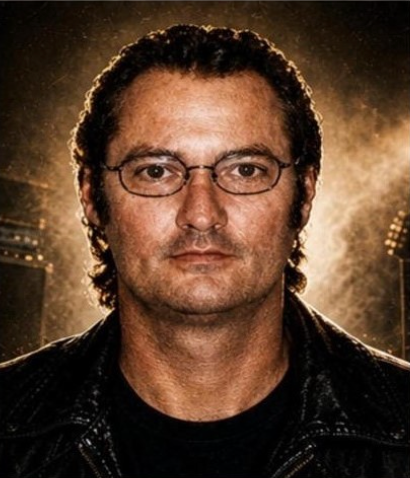
You’ve spent over four decades in music across Australia, Thailand and Papua New Guinea. Looking back, what has changed more: the music industry itself, or the people trying to succeed within it?
The industry has changed dramatically, the technology, the way music is distributed, the speed of everything. We went from loading vans with PA gear, long road trips, 5 and 6 hours gigs to having the ability to release a song to the world with a few clicks. But I don't think people have changed as much as we like to believe. The same dreams, insecurities, ambitions and need to connect through music are still there. Forty years ago, artists wanted to be heard and understood. They still do. The difference is that today there's a lot more noise to cut through. Talent still matters, but resilience and authenticity matter just as much.
Most artists spend their careers chasing their first album. You spent decades collecting experiences before launching FizikalReck. What did patience teach you that urgency never could?
Patience taught me that life writes better songs than ambition ever will. I wasn't in a hurry to prove anything. I played the pubs, the festivals, the clubs and the overseas gigs. I met extraordinary people and saw how similar we all are beneath the surface. By the time FizikalReck came along, I wasn't writing what I thought people wanted to hear, I was writing what I genuinely had to say from my point of view. Urgency wants immediate results. Patience gives you perspective, depth and honesty.
You’ve performed in front of festival crowds, clubs, country music audiences, pub rock fans and international audiences. What is the one thing every great audience has in common, regardless of where they are in the world?
They want to feel something real. It doesn't matter whether you're in rural Victoria, Thailand or Papua New Guinea. Audiences know when you're present and enjoying what you do and when you're simply going through the motions. The best crowds don't expect perfection; they respond to sincerity and your interaction with them. If you give them everything you've got and invite them into the moment, they'll give it back tenfold.
Your songs are built on real experiences, observations and memories accumulated over forty years. Has time made you more interested in telling your own story, or in telling stories that belong to everyone?
The older I've become, the more I've realised that the best personal stories usually belong to everyone. A song might begin with a moment from my own life, but if listeners can't find a piece of themselves in it, then it hasn't done its job. Whether it's struggle, hope, regret, resilience or celebration, those emotions are universal. The details may be mine, but the feeling belongs to all of us.
Many musicians burn out, walk away or lose their passion. What kept music alive in your life when so many others eventually put the guitar down?
Music was never just a career choice for me, it was part of who I was. There were times when life demanded attention elsewhere: family, business and responsibilities. But music was always there waiting patiently in the background. I think the secret is that I never viewed it as something the world owed me. I wasn't chasing fame. I simply loved playing, writing and connecting with people. If your relationship with music is built purely on external rewards, it's a difficult road. If you genuinely love it, you never really leave it.
You helped create opportunities for young musicians through the Musicians Club in Warragul long before social media existed. Do you think young artists today have more opportunities than ever, or fewer opportunities that actually matter?
Both. Young artists today have access to opportunities we couldn't have imagined. You can record at home, release globally and build an audience without waiting for permission. But at the same time, meaningful opportunities can be harder to recognise because there's an endless stream of content competing for attention. The challenge isn't access anymore, it's building genuine connections and enjoy what you are creating. I'd still encourage young artists to play live, collaborate, support one another and develop their craft. Trends fade. Relationships endure.
You’ve seen music evolve from live pub circuits and physical media to streaming platforms and online audiences. What has been gained through that evolution, and what do you think has quietly been lost?
We've gained accessibility and independence. Artists have more control over their music and listeners have the entire history of recorded music at their fingertips. That's extraordinary. What we've quietly lost is some of the sense of discovery and community that came with live scenes and physical spaces. People used to save up for an album, read every lyric and know every credit inside the sleeve. There was a deeper investment of time. But music itself remains powerful, it simply asks us to engage with it differently along with the listeners.
FizikalReck wasn't created to chase trends or fit neatly into a genre. After spending a lifetime around music, what do you think separates songs that last from songs that simply have their moment?
The songs that last, tell the truth. They don't need to be autobiographical, but they need emotional honesty. Great songs capture something timeless about being human. They can be played twenty years later and still mean something because they're built on substance rather than fashion. Trends create moments. Truth creates longevity.
Looking back at the young guitarist performing around Victoria in the 1980s, what would surprise him most about the artist you've become today?
He'd probably be surprised that I stopped worrying so much about fitting into a category. Back then, you thought you had to choose a lane and stay in it. These days, I trust my instincts more. FizikalReck moves between rock, acoustic, blues, country and storytelling because that's an honest reflection of a lifetime of musical influences. Over time I listened to a variety of music, you can always learn something from a place you wouldn’t normally or always look. I think he'd also be pleased to know that the passion never disappeared.
If someone discovers FizikalReck twenty years from now and knows nothing about your career, what do you hope they learn about FizikalReck before the final song finishes?
I hope they realise these songs were created by someone who genuinely loved music and respected the listener. I hope they hear honesty, resilience, humour, heart and a refusal to give up on creativity regardless of age or circumstance. Most of all, I hope they come away enjoying my songs and thinking, "Those songs felt real and I can relate to them in one way or another." If that happens, then FizikalReck has done exactly what it was meant to do.


Comments