XÄÄD | INTERVIEW + TRACK REVIEW
XääD is Sydney artist Dylan Regtop's ongoing experiment in what happens when you stop trying to belong to any one electronic scene. Built around live looping and a stubborn refusal to pick a lane, the project moves fluidly between deep house, breaks, minimal acid and experimental electronica. The name itself is a bit of an accident that stuck, an offshoot of his slower melancholy side project SääD, whose name is a play on the English word "sad" and the Arabic word "Saad" which means "joyous". That linguistic joke, that a word can mean opposite things at the same time, quietly underpins the whole XääD approach. Music can carry your body and your feelings at the same time. It doesn't have to choose.
XääD has built a serious catalogue in a short time, an album and multiple EPs across just two years, all guided less by discipline than by a permanent creative twitch that has Dylan making music in whatever pockets of time the day gives him. Live is where the project reveals itself most fully. He treats a XääD set as a real-time conversation with the room, a loop-driven performance that finds its shape somewhere between the gear, the crowd, and whatever happens in the space between the two. The stated goal is "electronic emotional euphoria," a phrase he doesn't hide from. In the interview below Dylan talks about the accidental origin of the name and the many creative pronunciations he's heard for it, why the dance floor is one of the last places people are still allowed to feel something publicly, the difference between a set that finds itself and one that doesn't, and what he hopes a first-time listener walks away chasing.
TRACK REVIEW
It just so happens that Get Dis Money is the first track I’m listening to today, and honestly, xääd has made a fairly convincing argument that my morning should start like this more often.
From the opening moments, everything seems to bounce. There’s this constant sense of movement underneath the track, with each element feeling almost like a counter-melody to the last, carrying you forward and quietly building anticipation for wherever it decides to go next. Nothing is in a hurry to reveal itself. Instead, xääd introduces the track piece by piece, letting each new sound have its moment before another slides into place.
And there is a lot happening here.
The drums immediately caught my attention. They’re busy and unpredictable enough to keep your ears moving, yet the track never becomes cluttered. Sounds seem to weave around one another rather than compete for space, creating this beautifully controlled chaos where even the smallest details feel deliberately placed.
Then there’s the overall atmosphere. Get Dis Money feels distinctly futuristic, but not cold or clinical. There’s a smoothness running through it that makes all of that experimentation strangely effortless to listen to. One moment I’m following the rhythm, the next some tiny melodic detail has pulled my attention somewhere completely different, and before long I’ve stopped trying to predict where the track is headed altogether.
That might be my favourite thing about it. xääd explores a ridiculous number of directions without making Get Dis Money feel directionless. There’s curiosity in the production, like the track is constantly asking, “What happens if we go over here?” and then somehow finding its way back before you even notice you’ve wandered off.
As the first song of my day, this was an unexpectedly pleasant way to wake my ears up. Smooth, intricate, playful and wonderfully strange, Get Dis Money has left me considerably more interested in what xääd decides to do next.
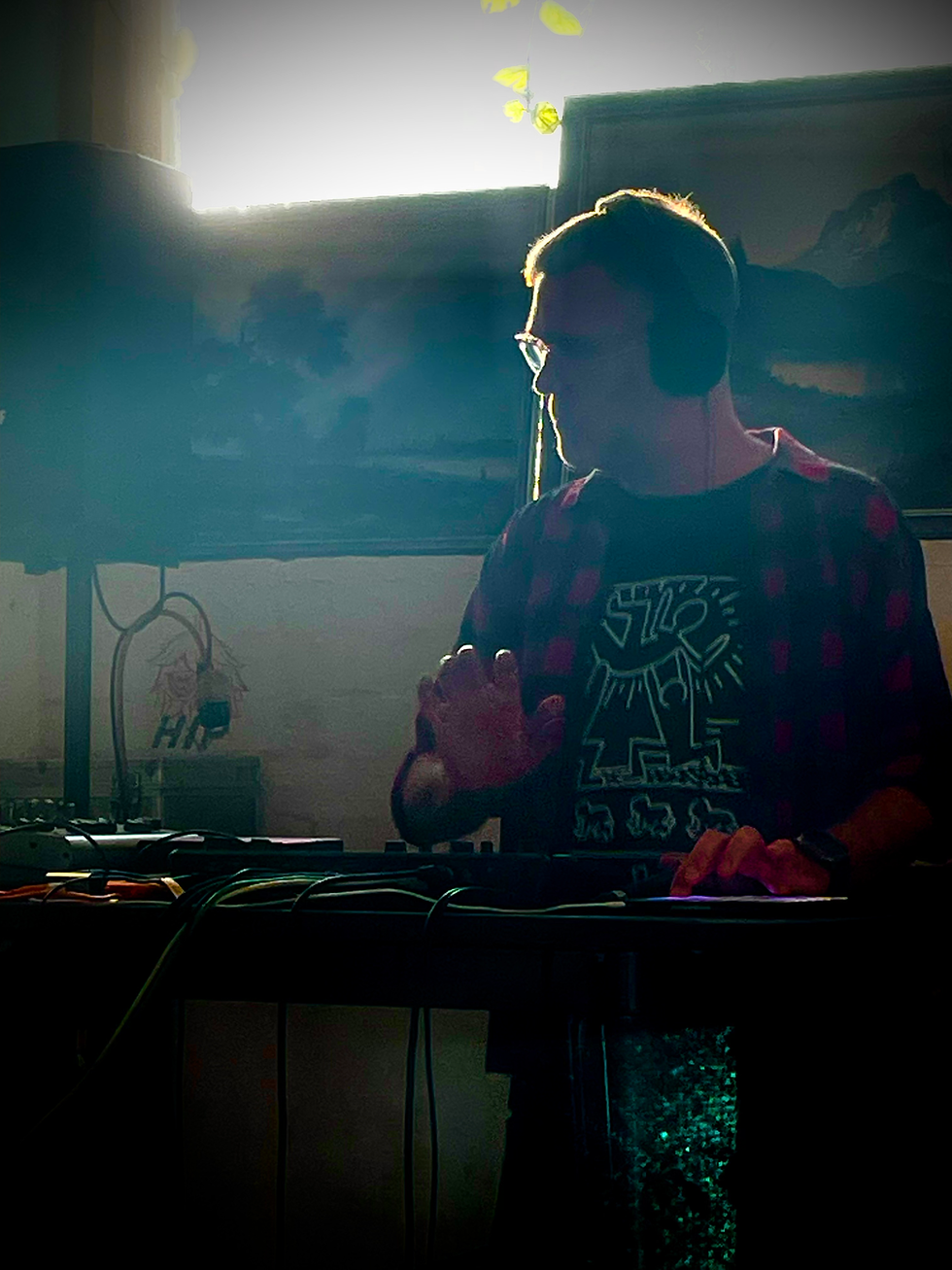
XääD is a name most people will pause on before they can say it, umlauts and all. Where does the word actually come from, and did you know when you named the project that it was going to make people stop and look twice before they even heard a note?
XääD is actually a bit of an accident that stuck.
It started from my other moniker "SääD" which is my slow and melancholy side project.
Saad in Arabic actually means joyous and so was a play on words regarding the sad nature of the tunes I was writing. Sad music to uplift the soul.
The umlauts definitely weren't part of some clever marketing masterplan… although I'd love to pretend they were!. It felt right, and once I saw it written down, I thought, "Yep, that's going to be annoying to type into Google or Spotify search."
I did realise pretty quickly that people were going to stop and ask, "How do you actually say that?" And honestly, I quite like that. It creates a little moment of curiosity before you've even heard the music.
It's pronounced "Zaaad", and the funny thing is that people have come up with all sorts of creative interpretations. I've heard everything from "Ex-ad" to "Zaid" and a few versions I'm probably not legally allowed to repeat.
So yes, the name makes people look twice — but hopefully the music gives them a reason to stick around.
Your music sits deliberately between deep house, breaks, minimal acid and experimental electronica, four scenes that usually pull artists in one specific direction. What is it in your ear that refuses to pick a lane, and do you ever get pressure from either the club side or the introspective side to commit to one?
I've never really been very good at picking a lane.
For me, deep house, breaks, minimal acid and experimental electronica are all just different ways of creating a feeling. Sometimes I want a groove that makes people move, sometimes I want something that feels like you've accidentally walked into another dimension at 2am. Ideally, I'd like to do both in the same track.
I'm really interested in the space between the dancefloor and the more introspective side of electronic music. There's something pretty magical about making music that can work with your eyes closed in a club, but can also hit differently when you're listening to it alone with headphones.
I've never really felt pressure to commit to one particular scene. If anything, I think the fun is in confusing people slightly. You might think you've got XääD figured out and then the next track comes along and completely changes direction.
At the end of the day, I'm chasing emotion and groove more than a genre. If it makes me feel something — and preferably makes my head nod involuntarily — then I'm probably on the right track.
Loops are the engine of your live shows. A lot of producers use them as scaffolding for songs; you seem to treat them as the song itself. What did you have to understand about repetition before it started to feel like movement rather than boredom?
Loops are definitely the engine of what I do live, but I think I fell in love with them because they give you this weird little musical playground. You can take a tiny sound, a beat, a vocal, a synth line — loop it — and then start messing with it until it becomes something completely different.
The trick is understanding that the listener doesn't necessarily need something new every four or eight bars. They just need to feel that something is moving.
A tiny change in a hi-hat, taking a kick away, stretching a vocal, bringing something in half a beat earlier — suddenly the loop you've been hearing for three minutes feels completely different. It's almost like staring at a painting and then noticing someone has moved one tiny thing in the background.
I also love the hypnotic side of repetition. There's a point where your brain stops analysing the music and just starts feeling it. That's probably where I get most excited.
Live looping also means I have to listen to what's happening rather than just press play and hope for the best. Sometimes a mistake becomes the best bit of the track. Sometimes it becomes a spectacular disaster and I have to pretend that was absolutely intentional.
So I don't really think of loops as scaffolding anymore. The loop is the canvas. The performance is what happens when you start painting on it.
You describe the goal of a XääD set as "electronic emotional euphoria." Euphoria is a big word to sign your name to. What does it actually feel like from behind the gear when you can tell the room is landing in that place with you?
I think you know it when you see it. There's a moment when people stop looking at their phones, stop worrying about what they're doing next, and just become completely present. That's the bit I'm chasing.
From behind the gear, it feels a little bit like watching a wave build. You've been layering things, taking things away, playing with the groove, and suddenly the whole room seems to breathe at the same time. People are moving without really thinking about it.
And there's something incredibly satisfying about knowing that the sounds you've created in a little room somewhere — probably at a fairly antisocial hour with headphones on — are now making a room full of strangers feel something together.
For me, euphoria doesn't necessarily mean everyone is going absolutely mental. Sometimes it's actually a really subtle thing. People close their eyes. Someone has this massive grin on their face. You look out and realise everyone is completely locked into the same moment.
That's when I know it's working.
And honestly, as a performer, it's addictive. You spend hours making music by yourself, and then suddenly you're standing in front of a room full of people and the music has a life of its own.
That's the emotional part of electronic emotional euphoria for me — creating a little temporary world where everyone can forget about everything else for a while.
And if there's some dancing, questionable dance moves and the occasional person doing something that looks like they're fighting an invisible octopus… even better.
You've written an album and multiple EPs in the past two years, which is a serious volume for one project. What's the daily or weekly rhythm that actually makes that possible, and where's the line between productive momentum and just outrunning the last idea?
I think the short answer is that I'm slightly obsessed!
I've always made music, but XääD gave me a reason to really lean into it. Once the project started taking shape, I found myself making music constantly — sometimes properly sitting down to write, and sometimes just grabbing 20 minutes here and there and seeing what happens.
I don't have some beautifully organised artist routine where I wake up at 6am, meditate, drink a green juice and write a masterpiece before breakfast. It's much more chaotic than that. Some days I'll spend hours working on one tiny sound, and other days I'll accidentally make half a track before I've even had coffee.
I think the key has been momentum rather than discipline. If I have an idea, I try to follow it while it's still exciting. I'll record things quickly, save lots of versions and come back later with fresh ears. Some ideas become proper tracks, some become little experiments, and some should probably be buried somewhere and never spoken about again.
The line between momentum and outrunning an idea is probably when I stop listening and start forcing it. If I'm working on something just because I think I should finish it, I know it's time to walk away.
I've also learned not to judge an idea too early. A weird little loop that sounds completely useless on Tuesday can suddenly become the centre of a track three weeks later.
So I guess the volume comes from staying curious. I'm not trying to write an album every Tuesday. I'm just following the ideas, and occasionally I look up and realise I've somehow made another EP.
Your writing process starts with fragments and loops that slowly become full pieces. Do you know early on which fragments have a full track hidden in them, or does the whole thing only reveal itself once you're deep in the layering?
Usually, I have absolutely no idea!
That's probably one of the things I enjoy most about the process. I'll start with something ridiculously small — a beat, a vocal fragment, a synth sound, a weird noise I've recorded — and initially it might not sound like anything at all. Then I start looping it and adding things, and somewhere along the way it starts telling me what it wants to be.
Sometimes I'll know almost immediately that there's a track in there. You get that little feeling of, "Oh… hang on. This could be something." Those are the dangerous ones because suddenly three hours have disappeared.
Other times I'll spend ages building something that I'm convinced is going somewhere, only to realise I've basically made a very complicated four-bar loop. Which is humbling!
I think the layering is where the personality of the track really reveals itself. I like leaving enough space for happy accidents to happen. A sound might clash with something else, but instead of deleting it, I'll move it around or distort it and suddenly it becomes the thing that makes the track interesting.
That's also why I don't like over-planning. If I knew exactly what the finished track was going to sound like before I started, I'd probably get bored.
For me, the best tracks feel discovered rather than designed. I start with a fragment, follow the rabbit hole, and eventually — hopefully — come out the other side with a song.
Sometimes I come out with a song. Sometimes I come out with a rabbit.
Loop-based live performance is unpredictable by design. What's the difference between a XääD show that finds itself and one that doesn't, and how much of that is technical versus emotional versus just the room you're in that night?
I think a good XääD show is a bit like cooking without a recipe. You've got all the ingredients ready, but you don't really know what dinner is going to taste like until you're in the kitchen.
Technically, there's obviously a lot that can go wrong. With live looping, you're building the music in real time, so if you press the wrong button, miss a loop or something decides to have a little electronic nervous breakdown, you have to deal with it. But I actually think those imperfections are part of what makes it exciting.
The biggest difference is whether I'm listening to the room.
If the crowd is really connecting, I can feel it and I'll naturally take the music somewhere different. Maybe I'll stay with a groove longer than I planned, strip everything back, or suddenly push it somewhere more euphoric. It becomes a conversation rather than me delivering a fixed performance.
And sometimes you walk into a room and it just doesn't happen. The energy might be different, people might be distracted, or maybe I'm just not quite finding the right musical door to open. You can't force it. You have to keep listening and try something else.
So I'd say the technical side gets you to the starting line, but the emotional side and the room determine where you actually go.
The best shows are the ones where I look down at the gear at some point and think, "Well, this wasn't what I planned at all… but I really like where we ended up."
That's when it feels properly live.
A lot of dance music aims purely at the body and a lot of introspective electronica aims purely at the head. XääD sounds like it wants both at the same time. Do you think the dance floor is one of the last places people are still allowed to feel something publicly, and does that shape what you make for it?
Yeah, I think there's something really special about a dance floor in that sense.
We live in a world where we're constantly being watched, judged, photographed, documented, liked, commented on… and then you walk onto a dance floor and, for a couple of hours, you can just lose yourself a little bit. Nobody really cares what you do with your arms anymore.
I think dancing gives people permission to express something they might not normally express. Happiness, sadness, desire, frustration, joy — sometimes all of it in the same five minutes. And you don't necessarily have to explain any of it.
That's a big part of what I'm interested in with XääD. I don't want to make music that's just telling your body, "Here, dance now." I want there to be something underneath the groove that gives your brain and your emotions somewhere to go as well.
The beautiful thing about electronic music is that you can sneak quite emotional ideas into something that initially sounds like, "Oh yeah, this is a nice beat." Then suddenly you're dancing and having an existential crisis at the same time. Which, let's be honest, is probably cheaper than therapy.
So yes, I definitely think the dance floor shapes what I make. I'm interested in that space where the body starts moving before the brain has worked out why.
If I can make someone dance, feel something, and maybe forget about their phone for three minutes, then I reckon I've done my job.
Your work stretches into songwriting, composition, performance and visuals. When you're building a XääD track or set, does one of those disciplines tend to lead the others, or are they all pulling at the material at the same time?
For me, it usually starts with sound and feeling rather than a particular discipline.
I might find a loop or a vocal fragment that gives me a feeling, and then everything else starts growing around it. The songwriting might emerge from that, the arrangement starts to take shape, and then the visual side often arrives because I start seeing something in my head that seems to belong with the music.
I don't really separate them too much. They're different ways of telling the same story.
Sometimes the music leads everything. Other times I'll see an image or have an idea for a visual and think, "Right, what does that sound like?" And the live performance is where all of those things get thrown into the blender and hopefully come out as something coherent.
I think that's one of the things I enjoy about XääD — I don't feel like I have to stay in one little box labelled MUSIC with a very stern librarian standing next to it.
I'm interested in the whole experience: what you hear, what you see, what you feel and what happens when you put all of that in a room with other people.
Ultimately, though, the emotion comes first. If the music doesn't make me feel something, no amount of clever visuals or production tricks is going to rescue it.
And once I've got that feeling, I just follow it wherever it wants to go.
If a first-time listener stumbled onto XääD in the middle of a set, no context, no track title, no bio, what do you hope they walk away chasing? The sound itself, the feeling in the room, or the version of themselves they briefly stopped being while it was playing?
Hopefully all three.
But if I had to choose one, I'd say the feeling.
I love the idea of someone walking into a XääD set with absolutely no idea who I am or what they're listening to. No context, no expectations, no clever artist bio — just hearing something and thinking, "What the hell is this… and why am I dancing?"
If they walk away remembering a particular sound or melody, that's great. If they remember the visuals, that's great too. But what I'm really hoping for is that they remember how they felt for that little period of time.
Maybe they were completely lost in the music. Maybe they danced like nobody was watching. Maybe they closed their eyes for ten minutes and forgot about the outside world. Maybe they had one of those strange little emotional moments where a piece of music suddenly connects with something personal.
That's the magic of live music for me. You don't necessarily know exactly what happened, but you know something happened.
And I don't think I need someone to walk away thinking, "That was XääD, an electronic looping artist from Sydney working across deep house, breaks and experimental electronica." That's probably more useful for a grant application.
I'd much rather they walk away thinking:
"I don't know what that was, but I want to feel that again."
That's the bit I'm chasing.
[ PRESS PHOTO - add via Wix editor ]


Comments